Industrial plants and warehouses
Many people, shifts and contractors: knowing who is in each area and that only the right people get in.
SMARTLEDGE · identity and access control
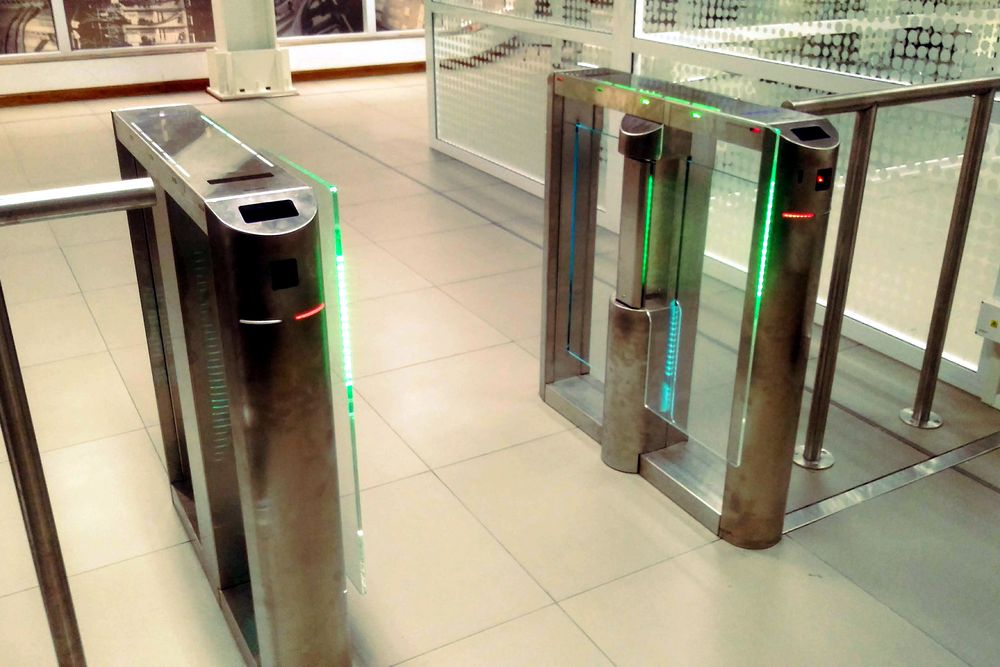
Biometric access control verifies who each person is —by face or fingerprint— before a door, turnstile or barrier opens, and records every passage. SMARTLEDGE designs, integrates and deploys access control with biometrics and RFID or QR credentials for companies and public bodies in Argentina: we choose the technology for the site and the process, connect it to your systems (HR, security) and set up alternative procedures for when biometrics is not enough.
A card can be lent, lost or copied; a face cannot. But biometrics only adds trust when it is well integrated into the process: who enters, where, when, and how you prove it afterwards.
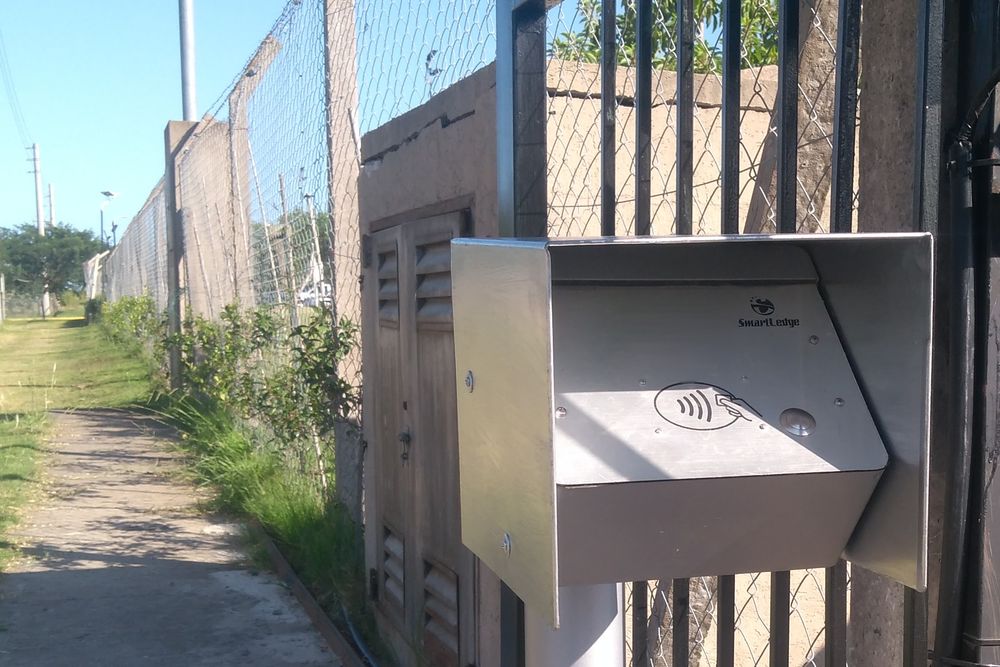
An RFID credential or a QR code proves that a person has something authorized. Biometrics proves that the person is who they claim to be. Most sites are best served by combining them.
| RFID or QR credential | Biometrics (face or fingerprint) | |
|---|---|---|
| What it proves | RFID or QR credentialThat a valid credential was presented | BiometricsThat the person is the one authorized |
| Main risk | RFID or QR credentialIt can be lent, lost or duplicated | BiometricsSpoofing with photos or molds: controlled with liveness detection |
| Onboarding and offboarding | RFID or QR credentialIssue, enable and withdraw the credential | BiometricsEnroll the person and delete their biometric data when they leave |
| Typical use | RFID or QR credentialVisitors, temporary contractors, multi-application credentials | BiometricsOwn staff, restricted zones, critical infrastructure |


We select manufacturers and equipment according to the project, its integration and its support. Scope, equipment and installation are defined in writing in each proposal.
 Critical infrastructure · identity
ARSAT
Biometric identity and segregated access for critical infrastructure, integrated with HR systems — centralized security management and reliable personnel traceability.
Lower operating cost Access control · traceability
Port of Buenos Aires
Identity, RFID and QR validation, enrollment and access control with multi-application credentials — distinguishing employees, contractors and suppliers across a large physical environment.
Multi-application credentialMany people, shifts and contractors: knowing who is in each area and that only the right people get in.
Telling employees, contractors, suppliers and visitors apart across a large physical environment with many entry points.
Restricted zones where a lent credential is not acceptable and you must prove who entered.
Hires, role changes and departures reflected in access rights, with no forgotten active credentials.
If you are not sure where to start, we start there: we review your operations and leave you written feedback with the best possible path in your technology context.
SMARTLEDGE covers the professional fees for the assessment and the written feedback. Travel expenses are covered by the prospect/customer. Offer available for Argentina, Chile, Paraguay and Uruguay.
Request a one-day assessment, no professional feesIt depends on how many people pass through, in what conditions (outdoors, dust, gloves, helmets), which zones must be separated and who comes in: your own staff, contractors, suppliers or visitors. A common approach combines biometrics for staff and restricted zones with RFID or QR credentials for visitors and temporary contractors, all recorded in a single system.
Facial recognition is contactless and faster where traffic is high; fingerprint is a proven option indoors. Fingerprints can fail with dirty, wet or worn hands, and faces with helmets, masks or poor lighting. We choose according to the site and the process, always with an alternative procedure.
It is the check that verifies a real person is in front of the reader, not a photo, a video, a mask or a fake fingerprint. It is what keeps biometrics from being fooled by an image of an authorized person.
Biometric data are personal data covered by Argentina's Personal Data Protection Law 25,326, whose supervisory authority is the Agency for Access to Public Information (AAIP). Our design covers informing people of the purpose, using the data only for that purpose, protecting the data and restricting access to it, and offering an alternative means of identification. Each organization should validate the legal basis and notices with its legal counsel.
Yes. Integrating access control with HR means hires, role changes and departures are reflected in permissions, and access records support personnel traceability. At ARSAT, for example, we integrated biometric identity and segregated access with the HR systems.
It depends on the number of entry points and readers, the type of door, turnstile or barrier, the number of people, integration with other systems and installation. We quote after surveying the site and the process.
Tell us which process you want to improve, what happens today and what outcome you need. That gives us a starting point to define the scope and next step.
Thank you. We received your message and will get back to you shortly.